
Helping someone with dementia eat and drink well
Why people with dementia can struggle at mealtimes, and practical ways to help them eat and drink enough.
- Published
- Topic
- Living with dementia
- Reading time
- 2 minutes
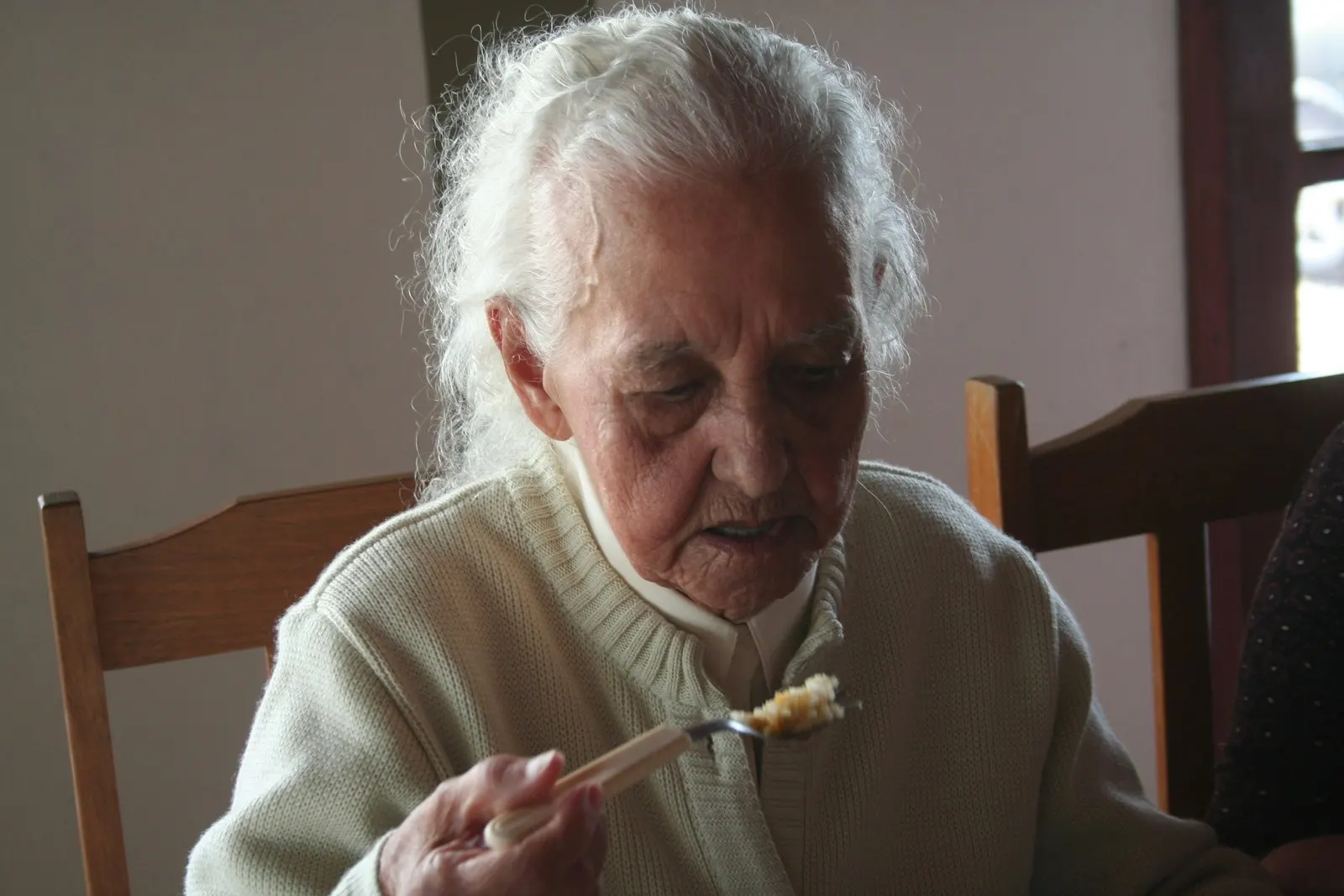
Dementia can affect eating and drinking in many ways. A person may forget they have eaten, not recognise food, find cutlery confusing or lose interest in meals. Small changes can help.
Why mealtimes get harder
- Memory problems can mean forgetting to eat, or forgetting they have just eaten.
- Changes in vision and perception can make it hard to see food on a plate.
- A busy, noisy room can be distracting.
- A sore mouth, loose dentures, constipation or an infection can put someone off food.
- Some people have problems swallowing as dementia progresses.
Practical ideas
- Keep it calm. Turn off the television and keep the table simple.
- Use contrast. A plate that stands out from the table, and food that stands out from the plate, is easier to see. The guide for carers written by Christian Care Homes notes that table mats that stand out from the table can help, and that research has found red plates encourage people to eat.
- One thing at a time. Too many knives, forks and spoons can confuse. Give the cutlery needed for each course.
- Finger foods. Sandwiches, small pieces of fruit or cheese are easier for someone who struggles with cutlery.
- Offer choices near the time. People with memory problems can usually still choose what they want, if asked close to the meal.
- Eat together. Seeing others eat can be a prompt.
- Little and often. Snacks and drinks between meals can help someone who eats only small amounts.
Drinks matter too
Not drinking enough can lead to constipation, urine infections and sudden confusion. Offer drinks often, in a cup that is easy to hold.
Respect their choices
If someone refuses food, try to find out why rather than insisting. They may not be hungry, may want something else or may have a physical reason. The person’s choices should be respected.
When to get help
Talk to the GP about weight loss, coughing or choking when eating or drinking, or a sore mouth. The GP can refer the person to a dietitian or a speech and language therapist.
Read more in our guide for carers, What is dementia?.
Thinking about care at Cedar House?
Come and look round, or call us on 01375 768505 at any time. Cedar House is at 249-251 Southend Road, Stanford-le-Hope.

Come and see Cedar House
Tell us a little about who the care is for and we will call you back to arrange a visit. Or ring the home, day or night.
01375 768505Ask about a visit or a room
Fill in the form and someone from Cedar House will get back to you.